Spirooxazine- and spiropyran-doped hybrid organic–inorganicmatrices with very fast photochromic responses

ty10086 提交于 周四, 08/26/2021 - 13:02
文章英文标题
Spirooxazine- and spiropyran-doped hybrid organic–inorganicmatrices with very fast photochromic responses
正文
Spirooxazine- and spiropyran-doped hybrid organic–inorganic matrices with very fast photochromic responses Barbara Schaudel,a Ce�line Guermeur,a Cle�ment Sanchez,*a Keitaro Nakatanib and Jacques A. Delaireb aL aboratoire de Chimie de la Matie`re Condense�e, URA CNRS 1466, Universite� Pierre etMarie Curie, 4 Place Jussieu, 75252 Paris, France bL aboratoire de Photophysique et Photochimie Supramole�culaires etMacromole�culaires, URA CNRS 1906, ENS CACHAN, 61 Avenue du Pre�sident Wilson, 94235 Cachan Cedex, France Both spirooxazine and spiropyran dyes have been embedded into two different hybrid matrices, which were formed from hydrolysis and cocondensation between diethoxydimethylsilane and zirconium propoxide and between methyldiethoxysilane (DH) and triethoxysilane (TH) respectively.The nature and the kinetics of the photochromic response depend strongly on the hydrophobic/hydrophilic balance (HHB) of the hybrid material. The HHB controls the competition between direct and reverse photochromism. The photochromic behaviour of the strongly hydrophobic spirooxazine-doped DH/TH coatings is direct, highly efficient (DA\u003e1), reversible and extremely fast (thermal bleaching time constant, k=0.2 s-1).The photochromic kinetics of this hybrid material are, to the best of our knowledge, much faster than those reported for spirooxazine in any other solid matrix. The mild characteristics offered by the sol–gel process allow interactions on the kinetics of colouration and thermal fading. As far as photochromic devices are concerned, tuning between the introduction of organic molecules within an inorganic a strong and fast photochromic colouration (large DA) and a network.1 Inorganic and organic components can then be very fast thermal fading is needed.Usually spiropyran- or mixed at the nanometric scale in virtually any ratio, leading spirooxazine-doped sol–gel matrices or even spirooxazine- to the so-called hybrid organic–inorganic nanocomposites.2–4 doped polymeric matrices exhibit slow thermal fading (at least These hybrids are extremely versatile in their composition, several minutes).10–17 processing, and optical and mechanical properties.5 Organic This article addresses the photochromic behaviour of a molecules play an important role in optics; many hybrid optical systems such as luminescent solar concentrators, solidstate dye lasers, optical sensors, photochromic and NLO devices have been developed in the past few years.6–9 Spiropyrans and spirooxazines are two of the fascinating families of molecules exhibiting photochromic properties. Upon irradiation, the colourless spiropyran or spirooxazine undergo a heterolytic CMO ring cleavage, producing coloured forms of merocyanines (Fig. 1).The merocyanines may interact with their environment, i.e. solvent, matrix etc., leading to different photochromic responses. Levy and co-workers10,11 first demonstrated the important role played by the dye–matrix interactions in the photochromic response of spiropyrans. They studied the photochromism of spiropyrans trapped in sol–gel matrices synthesized via polymerization of Si(OCH3)4 or RSi(OEt)3 (R=ethyl, methyl, etc.) precursors, and observed two types of photochromic behaviour.When the photochromic dye is trapped within a hydrophilic domain of the matrix (domain containing residual SiMOH groups), the open zwitterionic coloured forms are probably stabilized through hydrogen bonding with the acidic silanol groups present at the pore surface.The result of this stabilization is the observation of the coloured forms before irradiation. These coloured forms can be bleached by irradiation in the visible range. This has been termed ‘reverse photochromism’. On the other hand, spiropyran dyes embedded in a more hydrophobic hybrid network made by hydrolysis of RSi(OEt)3 exhibit direct photochromism, i.e.the colourless form is stable without irradiation. Such photochromic behaviour has been reported for many spiropyran- or spirooxazine-doped sol–gel matrices.12–17 Moreover, for hybrid organic–inorganic matrices containing different chemical environments (hydrophilic and hydrophobic domains) a competition between direct and reverse photochromisms can be observed.17 However, many fundamental questions still need to be considered.Little is Fig. 1 Representation of the two photochromic dyes SP and SO and their open form known concerning the role of the photochromic dye–matrix J. Mater. Chem., 1997, 7(1), 61–65 61spiropyran, SP (6-nitro-1¾,3¾,3¾-trimethylspiro-2H-1-benzopyran- 2,2¾-indoline) and a spirooxazine, SO [1,3,3-trimethylspiroindoline- 2,3¾-(3H)-naph(2,1-b)-(1,4)oxazine] (Fig. 1) embedded within two new hybrid matrices. The tuning of dye–matrix interactions allows us to obtain spirooxazine-doped hybrid coatings which exhibit a strong and very fast photochromic response. Two kinds of hybrid matrices have been synthesized by using organically modified silicon alkoxide precursors [R¾xSi(OEt)4-x] (R¾=CH3, H), eventually cocondensed with zirconium alkoxide, Zr(OPrn)4.Fig. 2 Experimental setup used for photochromic behaviour studies Experimental Synthesis of the samples by measuring the light intensity transmitted The SP and SO dyes were purchased from Aldrich. through the sample during and after irradiation. The wave- The first SP- or SO-doped hybrid matrix was prepared as length of this probe beam was selected by a set of two follows.(CH3)2Si(OC2H5)2 (D; Fluka), absolute ethanol and monochromators. Its intensity was attenuated strongly comwater in a y50.55y molar ratio were mixed for three minutes pared to the irradiation beam. The transmitted light was under magnetic stirring. The pH of the water was adjusted to detected by a photomultiplier linked to a computer-driven 2 by addition of hydrochloric acid.The appropriate amounts digital multimeter (Keithley 2000). The incidence was close to of Zr(OPrn)4 (Fluka) were added to the solutions in order to normal for both beams. produce Zr5Si (x5y) molar ratios ranging from 10590 to 30570. Kinetics of bleaching were studied by following the fading After ageing for 1 h, the photochromic dye solution (10-2 mol of the absorbance (A) at 490 nm for SP and 610 nm for SO, dm-3 in ethanol) was added to the sol.Samples will be labelled which are the absorption maxima in the visible region for the D/Zrx, where Zr stands for the zirconium, x for the amount doped D/Zrx matrices. The thermal bleachings were fitted by of zirconium (Zr5Si, x5y). using mono [A=Bexp(-kt)+C] or bi-exponential [A= The second SP- or SO-doped matrix was prepared from the Bexp(-k1t)+Cexp(-k2t)+D] equations.hydrolysis and cocondensation of (CH3)HSi(OC2H5)2 (DH; ABCR) and HSi(OC2H5)3 (TH; Fluka), precursors. The Results and Discussion DH5TH5EtOH5H2O (pH=7) molar ratios were 0.750.350.551. The dye solution (10-2 mol dm-3 in ethanol) Materials was added after a few minutes. Samples are labelled The D/Zrx matrices have been characterized already by 13C DH70/TH30.MAS, 29Si MAS and CP MAS NMR studies.18,19 These data Bulk samples and coatings a few mm thick were prepared revealed that these D/Zrx systems are hybrid nanocomposites easily from both doped D/Zrx and DH70/TH30 sols. made from polydimethylsiloxane chains and zirconium oxopolymers. Moreover, FTIR and DTA show that the zirconium NMR experiments oxopolymers are hydrophilic domains that still contain The MAS NMR experiments were realised on a Bruker MSL hydroxo groups coming from residual ethanol or ZrMOH 300 spectrometer using a Bruker 7 mm rotor.Spectra were ligands.20 The size and the spacing between the ZrO2-based recorded with 1 ms pulses, a 0.1 s delay and a 5 kHz spinning domains is about a few nm, as indicated by SAXS.20 However speed for 17O, with 2 ms pulses, a 10 s delay and a 4 kHz the nature of the interface between the PDMS chains and the spinning speed for 29Si and with 3 ms pulses, a 10 s delay and zirconium oxo-based domains was not defined in these hybrid a 4 kHz spinning speed for 1H spectra.The positions of the materials. 17O MAS re therefore carried out NMR resonances were located taking Me4Si (29Si and 1H) and to clarify the nature of the interface.water (17O) as d 0 references. The 17O MAS NMR spectrum of the D/Zr20 matrix (Fig. 3) The low natural abundance of the 17O nucleus shows large resonances located at d 400 and 290 which [(3.7×10⁻²)%] and its quadrupole moment renders its detec- represent OZr3 and OZr4 respectively.21 The assignement of tion difficult. However, the use of 10% 17O-enriched water for the sharper resonance located at d 336 is not obvious at the the hydrolysis of precursors lead to a specific labelling of moment.It may be due to some residual molecular OZr4 SiMO*H, SiMO*MSi and SiMO*MM groups, and thus species. The main peak at d 73 is due to bridging OSi2 and greatly enhances their detectability compared to ROH or the broad signal around d 160 to SiMOMZr bonds.22 The SiMOR groups.FTIR spectroscopy IR spectra were recorded on powdered samples with the conventional KBr pellet technique using a 550 Magna Nicolet FTIR spectrometer. Optical experiments The photochromic behaviour of the samples was studied using the experimental setup described in Fig. 2. A xenon mercury arc lamp (450W), providing light in the UV–VIS spectrum, was used to irradiate the sample. The appropriate irradiation wavelength was chosen by means of a narrow-band (10 nm) interference filter, and commutation of a shutter allowed us to make irradiation cycles. A beam from another light source, a Fig. 3 17O MAS NMR spectrum of the D/Zr20 matrix xenon lamp (150 W), was used to follow the absorbance change 62 J.Mater. Chem., 1997, 7(1), 61–65peaks assigned to homocondensation are then the major signals. These data revealed clearly that these D/Zrx systems can be better described as a nanocomposite because homocondensation OZr3, OZr4, OSi2 species have been identified clearly. This composite is built from hydrophobic polydimethylsiloxane chains covalently linked through ZrMOMSi bonds to hydrophilic domains made of zirconium oxopolymers (Fig. 4). The DH70/TH30 matrix was characterized by 1H MAS, 29Si MAS NMR and FTIR spectroscopies. The 29Si MAS NMR spectrum (Fig. 5) exhibited only two pairs of doublets located at d 32.5, -36.8 and d 82, -87.4. These resonances are due to fully condensed DHand THunits, respectively.The doublets are due to J coupling between Si and H via SiMH bonds. They are observed in the NMR solid-state spectrum because the 29Si resonances are particularly narrow suggesting a quasiliquid behaviour of the DH and TH units. The ratio between these resonances is 70530, as in the initial mixture, showing that upon hydrolysis and cocondensation reactions the SiMH Fig. 6 1H MAS NMR spectrum of the DH70/TH30 matrix bonds of DH and TH precursors have not been cleaved.24 The 1H MAS NMR spectrum (Fig. 6) exhibited one peak at according to the integration of the peaks, are in a 0.151 ratio d 0.4 due to the methyl protons of the DH units and two with silicium. The network is then almost fully condensed. peaks at d 4.5 and 4.9 due to SiH in the TH and DH units In the FTIR spectrum of the DH70/TH30 coatings (Fig. 7) respectively. The peaks at d 1.4 and 4.0 which correspond to the presence of strong IR bands located at 2237 and 2176 cm-1 CH3 and CH2 groups, respectively, are due to residual species: confirmed that the SiMH bonds of the DH and TH precursors ethoxy groups and asmall proportion of ethanol. These species, have not been cleaved.These bands correspond to nSiMH in TH and DH units respectively. The DH70/TH30 coatings also exhibit strong IR bands located at 1000–1100 cm-1, indicating the formation of SiMOMSi linkages. Moreover, the 2300–4000 cm-1 frequency range (the nOMH region) is absolutely flat, suggesting that these matrices have an extremely low hydroxy group content. In agreement with data reported previously23 the strongly hydrophobic DH/TH network can be described as a copolymer formed by short chains of DH units crosslinked by TH units.Both D/Zrx and DH/TH exhibit glass-transition temperatures at about -100 °C23,24 and their specific areas measured by nitrogen adsorption porosimetry are extremely low (\u003c5 m2 g-1). These two matrices are very flexible and do not present any open porosity under nitrogen probing.At room temperature, both SP and SO dyes embedded in these hybrid matrices exhibit good stability. However, the photostability of these materials is currently under investigation. Photochromic properties D/Zrx matrices doped with SP or SO are lightly coloured (pink with SP or blue with SO) before irradiation. However, Fig. 4 Schematic representation of the D/Zr matrix the absorbance in the visible region is weak in comparison with the total amount of embedded photochromic dyes.The amount of coloured form depends on x. Fig. 8 shows the photochromic behaviour of SP-doped D/Zrx gels for three x Fig. 5 29Si MAS NMR spectrum of the DH70/TH30 matrix Fig. 7 IR spectrum of the DH70/TH30 matrix J. Mater. Chem., 1997, 7(1), 61–65 63pyran- and spirooxazine-doped sol–gel matrices and polymers are also given.The kinetic data of the SP- or SO-doped D/Zr20 samples are similar to those reported for other modified sol–gel matrices or in organic polymers.17,25 As in organic polymers, the bleaching follows a biexponential equation which can be explained by an inhomogeneous distribution of free volumes in the gel.Moreover, the presence of different stereoisomers (cis or trans) could also account for this behaviour. The different isomer–matrix interactions could explain the different kinetics observed for SO and SP. The thermal fading is longer for SP-doped hybrids than for SO-doped ones. This phenomenom can be correlated to the fact that SP open forms are known for their tendency to form zwitterionic species, while non-charged quinonic species are usually favoured for open SO molecules.Zwitterionic species Fig. 8 Photocolouration (lirr=320 nm) and photodecolouration (lirr= can be stabilized markedly by hydrogen bonding with the 547 nm) for SP-doped D/Zr bulks at 490 nm, (a) D/Zr10, (b) D/Zr20, matrix, thus lowering the decay times of thermal fading.(c) D/Zr30 The SO or SP DH70/TH30 doped matrices exhibit normal photochromism. All the samples are colourless before values. When the amount of zirconium increases, the irradiation. This is probably due to the strong hydrophobic absorbance variation due to the colouration decreases while character of this matrix. For the two photochromic dyes, the that due to decolouration increases: there are more open forms thermal fading can be fitted, with excellent agreement, to a in the gel.The amount of coloured form increases pro- monoexponential equation. This may be related to the quasi- portionally with x and is much higher for D/Zr30 than for liquid mobility observed by NMR for this matrix. D/Zr10 samples. The rate constants obtained for the two dyes embedded in This indicates that before irradiation the SO and SP dyes the DH70/TH30 matrix are also reported in Table 1.The are split roughly into two populations. The coloured merocya- thermal fading of SP in the DH70/TH30 matrix is faster than nine open forms of SO and SP are stabilized by hydrogen those reported for other sol–gel matrices10,11 or for PMMA.25 bonding within the hydrophilic regions of the zirconium oxopo- The time dependence of the absorption upon repeated lymers, while the closed SO and SP forms are probably located irradiation with 365 nm light for SO-doped DH70/TH30 coat- in the environment of the hydrophobic polydimethylsiloxane ings is reported in Fig. 9. The photochromic behaviour is chains. Therefore, for these D/Zrx matrices the photochromism reversible, extremely fast (k=0.2 s-1) and corresponds to a is partially reversible and can be balanced by tuning the very high absorption jump (DA=1.2).The photochromic D/Zr ratio. kinetics of this SO-doped material are, to the best of our The thermal bleaching behaviour of the D/Zr20 samples knowledge, much faster than those reported for SO in any were fitted with a biexponential equation. The SP-doped other matrix (sol–gel matrices, organic polymers, alcohols, materials exhibited a very long bleaching time (ca. 24 h) while etc.).14,15,17,25,27 for the SO-doped D/Zr20 materials the thermal fading was It is interesting to note that when embedded within the much faster. The rate constants

文章内容(英文)
Spirooxazine- and spiropyran-doped hybrid organic–inorganic matrices with very fast photochromic responses Barbara Schaudel,a Ce�line Guermeur,a Cle�ment Sanchez,*a Keitaro Nakatanib and Jacques A. Delaireb aL aboratoire de Chimie de la Matie`re Condense�e, URA CNRS 1466, Universite� Pierre etMarie Curie, 4 Place Jussieu, 75252 Paris, France bL aboratoire de Photophysique et Photochimie Supramole�culaires etMacromole�culaires, URA CNRS 1906, ENS CACHAN, 61 Avenue du Pre�sident Wilson, 94235 Cachan Cedex, France Both spirooxazine and spiropyran dyes have been embedded into two different hybrid matrices, which were formed from hydrolysis and cocondensation between diethoxydimethylsilane and zirconium propoxide and between methyldiethoxysilane (DH) and triethoxysilane (TH) respectively.The nature and the kinetics of the photochromic response depend strongly on the hydrophobic/hydrophilic balance (HHB) of the hybrid material. The HHB controls the competition between direct and reverse photochromism. The photochromic behaviour of the strongly hydrophobic spirooxazine-doped DH/TH coatings is direct, highly efficient (DA\u003e1), reversible and extremely fast (thermal bleaching time constant, k=0.2 s-1).The photochromic kinetics of this hybrid material are, to the best of our knowledge, much faster than those reported for spirooxazine in any other solid matrix. The mild characteristics offered by the sol–gel process allow interactions on the kinetics of colouration and thermal fading. As far as photochromic devices are concerned, tuning between the introduction of organic molecules within an inorganic a strong and fast photochromic colouration (large DA) and a network.1 Inorganic and organic components can then be very fast thermal fading is needed.Usually spiropyran- or mixed at the nanometric scale in virtually any ratio, leading spirooxazine-doped sol–gel matrices or even spirooxazine- to the so-called hybrid organic–inorganic nanocomposites.2–4 doped polymeric matrices exhibit slow thermal fading (at least These hybrids are extremely versatile in their composition, several minutes).10–17 processing, and optical and mechanical properties.5 Organic This article addresses the photochromic behaviour of a molecules play an important role in optics; many hybrid optical systems such as luminescent solar concentrators, solidstate dye lasers, optical sensors, photochromic and NLO devices have been developed in the past few years.6–9 Spiropyrans and spirooxazines are two of the fascinating families of molecules exhibiting photochromic properties. Upon irradiation, the colourless spiropyran or spirooxazine undergo a heterolytic CMO ring cleavage, producing coloured forms of merocyanines (Fig. 1).The merocyanines may interact with their environment, i.e. solvent, matrix etc., leading to different photochromic responses. Levy and co-workers10,11 first demonstrated the important role played by the dye–matrix interactions in the photochromic response of spiropyrans. They studied the photochromism of spiropyrans trapped in sol–gel matrices synthesized via polymerization of Si(OCH3)4 or RSi(OEt)3 (R=ethyl, methyl, etc.) precursors, and observed two types of photochromic behaviour.When the photochromic dye is trapped within a hydrophilic domain of the matrix (domain containing residual SiMOH groups), the open zwitterionic coloured forms are probably stabilized through hydrogen bonding with the acidic silanol groups present at the pore surface.The result of this stabilization is the observation of the coloured forms before irradiation. These coloured forms can be bleached by irradiation in the visible range. This has been termed ‘reverse photochromism’. On the other hand, spiropyran dyes embedded in a more hydrophobic hybrid network made by hydrolysis of RSi(OEt)3 exhibit direct photochromism, i.e.the colourless form is stable without irradiation. Such photochromic behaviour has been reported for many spiropyran- or spirooxazine-doped sol–gel matrices.12–17 Moreover, for hybrid organic–inorganic matrices containing different chemical environments (hydrophilic and hydrophobic domains) a competition between direct and reverse photochromisms can be observed.17 However, many fundamental questions still need to be considered.Little is Fig. 1 Representation of the two photochromic dyes SP and SO and their open form known concerning the role of the photochromic dye–matrix J. Mater. Chem., 1997, 7(1), 61–65 61spiropyran, SP (6-nitro-1¾,3¾,3¾-trimethylspiro-2H-1-benzopyran- 2,2¾-indoline) and a spirooxazine, SO [1,3,3-trimethylspiroindoline- 2,3¾-(3H)-naph(2,1-b)-(1,4)oxazine] (Fig. 1) embedded within two new hybrid matrices. The tuning of dye–matrix interactions allows us to obtain spirooxazine-doped hybrid coatings which exhibit a strong and very fast photochromic response. Two kinds of hybrid matrices have been synthesized by using organically modified silicon alkoxide precursors [R¾xSi(OEt)4-x] (R¾=CH3, H), eventually cocondensed with zirconium alkoxide, Zr(OPrn)4.Fig. 2 Experimental setup used for photochromic behaviour studies Experimental Synthesis of the samples by measuring the light intensity transmitted The SP and SO dyes were purchased from Aldrich. through the sample during and after irradiation. The wave- The first SP- or SO-doped hybrid matrix was prepared as length of this probe beam was selected by a set of two follows.(CH3)2Si(OC2H5)2 (D; Fluka), absolute ethanol and monochromators. Its intensity was attenuated strongly comwater in a y50.55y molar ratio were mixed for three minutes pared to the irradiation beam. The transmitted light was under magnetic stirring. The pH of the water was adjusted to detected by a photomultiplier linked to a computer-driven 2 by addition of hydrochloric acid.The appropriate amounts digital multimeter (Keithley 2000). The incidence was close to of Zr(OPrn)4 (Fluka) were added to the solutions in order to normal for both beams. produce Zr5Si (x5y) molar ratios ranging from 10590 to 30570. Kinetics of bleaching were studied by following the fading After ageing for 1 h, the photochromic dye solution (10-2 mol of the absorbance (A) at 490 nm for SP and 610 nm for SO, dm-3 in ethanol) was added to the sol.Samples will be labelled which are the absorption maxima in the visible region for the D/Zrx, where Zr stands for the zirconium, x for the amount doped D/Zrx matrices. The thermal bleachings were fitted by of zirconium (Zr5Si, x5y). using mono [A=Bexp(-kt)+C] or bi-exponential [A= The second SP- or SO-doped matrix was prepared from the Bexp(-k1t)+Cexp(-k2t)+D] equations.hydrolysis and cocondensation of (CH3)HSi(OC2H5)2 (DH; ABCR) and HSi(OC2H5)3 (TH; Fluka), precursors. The Results and Discussion DH5TH5EtOH5H2O (pH=7) molar ratios were 0.750.350.551. The dye solution (10-2 mol dm-3 in ethanol) Materials was added after a few minutes. Samples are labelled The D/Zrx matrices have been characterized already by 13C DH70/TH30.MAS, 29Si MAS and CP MAS NMR studies.18,19 These data Bulk samples and coatings a few mm thick were prepared revealed that these D/Zrx systems are hybrid nanocomposites easily from both doped D/Zrx and DH70/TH30 sols. made from polydimethylsiloxane chains and zirconium oxopolymers. Moreover, FTIR and DTA show that the zirconium NMR experiments oxopolymers are hydrophilic domains that still contain The MAS NMR experiments were realised on a Bruker MSL hydroxo groups coming from residual ethanol or ZrMOH 300 spectrometer using a Bruker 7 mm rotor.Spectra were ligands.20 The size and the spacing between the ZrO2-based recorded with 1 ms pulses, a 0.1 s delay and a 5 kHz spinning domains is about a few nm, as indicated by SAXS.20 However speed for 17O, with 2 ms pulses, a 10 s delay and a 4 kHz the nature of the interface between the PDMS chains and the spinning speed for 29Si and with 3 ms pulses, a 10 s delay and zirconium oxo-based domains was not defined in these hybrid a 4 kHz spinning speed for 1H spectra.The positions of the materials. 17O MAS re therefore carried out NMR resonances were located taking Me4Si (29Si and 1H) and to clarify the nature of the interface.water (17O) as d 0 references. The 17O MAS NMR spectrum of the D/Zr20 matrix (Fig. 3) The low natural abundance of the 17O nucleus shows large resonances located at d 400 and 290 which [(3.7×10⁻²)%] and its quadrupole moment renders its detec- represent OZr3 and OZr4 respectively.21 The assignement of tion difficult. However, the use of 10% 17O-enriched water for the sharper resonance located at d 336 is not obvious at the the hydrolysis of precursors lead to a specific labelling of moment.It may be due to some residual molecular OZr4 SiMO*H, SiMO*MSi and SiMO*MM groups, and thus species. The main peak at d 73 is due to bridging OSi2 and greatly enhances their detectability compared to ROH or the broad signal around d 160 to SiMOMZr bonds.22 The SiMOR groups.FTIR spectroscopy IR spectra were recorded on powdered samples with the conventional KBr pellet technique using a 550 Magna Nicolet FTIR spectrometer. Optical experiments The photochromic behaviour of the samples was studied using the experimental setup described in Fig. 2. A xenon mercury arc lamp (450W), providing light in the UV–VIS spectrum, was used to irradiate the sample. The appropriate irradiation wavelength was chosen by means of a narrow-band (10 nm) interference filter, and commutation of a shutter allowed us to make irradiation cycles. A beam from another light source, a Fig. 3 17O MAS NMR spectrum of the D/Zr20 matrix xenon lamp (150 W), was used to follow the absorbance change 62 J.Mater. Chem., 1997, 7(1), 61–65peaks assigned to homocondensation are then the major signals. These data revealed clearly that these D/Zrx systems can be better described as a nanocomposite because homocondensation OZr3, OZr4, OSi2 species have been identified clearly. This composite is built from hydrophobic polydimethylsiloxane chains covalently linked through ZrMOMSi bonds to hydrophilic domains made of zirconium oxopolymers (Fig. 4). The DH70/TH30 matrix was characterized by 1H MAS, 29Si MAS NMR and FTIR spectroscopies. The 29Si MAS NMR spectrum (Fig. 5) exhibited only two pairs of doublets located at d 32.5, -36.8 and d 82, -87.4. These resonances are due to fully condensed DHand THunits, respectively.The doublets are due to J coupling between Si and H via SiMH bonds. They are observed in the NMR solid-state spectrum because the 29Si resonances are particularly narrow suggesting a quasiliquid behaviour of the DH and TH units. The ratio between these resonances is 70530, as in the initial mixture, showing that upon hydrolysis and cocondensation reactions the SiMH Fig. 6 1H MAS NMR spectrum of the DH70/TH30 matrix bonds of DH and TH precursors have not been cleaved.24 The 1H MAS NMR spectrum (Fig. 6) exhibited one peak at according to the integration of the peaks, are in a 0.151 ratio d 0.4 due to the methyl protons of the DH units and two with silicium. The network is then almost fully condensed. peaks at d 4.5 and 4.9 due to SiH in the TH and DH units In the FTIR spectrum of the DH70/TH30 coatings (Fig. 7) respectively. The peaks at d 1.4 and 4.0 which correspond to the presence of strong IR bands located at 2237 and 2176 cm-1 CH3 and CH2 groups, respectively, are due to residual species: confirmed that the SiMH bonds of the DH and TH precursors ethoxy groups and asmall proportion of ethanol. These species, have not been cleaved.These bands correspond to nSiMH in TH and DH units respectively. The DH70/TH30 coatings also exhibit strong IR bands located at 1000–1100 cm-1, indicating the formation of SiMOMSi linkages. Moreover, the 2300–4000 cm-1 frequency range (the nOMH region) is absolutely flat, suggesting that these matrices have an extremely low hydroxy group content. In agreement with data reported previously23 the strongly hydrophobic DH/TH network can be described as a copolymer formed by short chains of DH units crosslinked by TH units.Both D/Zrx and DH/TH exhibit glass-transition temperatures at about -100 °C23,24 and their specific areas measured by nitrogen adsorption porosimetry are extremely low (\u003c5 m2 g-1). These two matrices are very flexible and do not present any open porosity under nitrogen probing.At room temperature, both SP and SO dyes embedded in these hybrid matrices exhibit good stability. However, the photostability of these materials is currently under investigation. Photochromic properties D/Zrx matrices doped with SP or SO are lightly coloured (pink with SP or blue with SO) before irradiation. However, Fig. 4 Schematic representation of the D/Zr matrix the absorbance in the visible region is weak in comparison with the total amount of embedded photochromic dyes.The amount of coloured form depends on x. Fig. 8 shows the photochromic behaviour of SP-doped D/Zrx gels for three x Fig. 5 29Si MAS NMR spectrum of the DH70/TH30 matrix Fig. 7 IR spectrum of the DH70/TH30 matrix J. Mater. Chem., 1997, 7(1), 61–65 63pyran- and spirooxazine-doped sol–gel matrices and polymers are also given.The kinetic data of the SP- or SO-doped D/Zr20 samples are similar to those reported for other modified sol–gel matrices or in organic polymers.17,25 As in organic polymers, the bleaching follows a biexponential equation which can be explained by an inhomogeneous distribution of free volumes in the gel.Moreover, the presence of different stereoisomers (cis or trans) could also account for this behaviour. The different isomer–matrix interactions could explain the different kinetics observed for SO and SP. The thermal fading is longer for SP-doped hybrids than for SO-doped ones. This phenomenom can be correlated to the fact that SP open forms are known for their tendency to form zwitterionic species, while non-charged quinonic species are usually favoured for open SO molecules.Zwitterionic species Fig. 8 Photocolouration (lirr=320 nm) and photodecolouration (lirr= can be stabilized markedly by hydrogen bonding with the 547 nm) for SP-doped D/Zr bulks at 490 nm, (a) D/Zr10, (b) D/Zr20, matrix, thus lowering the decay times of thermal fading.(c) D/Zr30 The SO or SP DH70/TH30 doped matrices exhibit normal photochromism. All the samples are colourless before values. When the amount of zirconium increases, the irradiation. This is probably due to the strong hydrophobic absorbance variation due to the colouration decreases while character of this matrix. For the two photochromic dyes, the that due to decolouration increases: there are more open forms thermal fading can be fitted, with excellent agreement, to a in the gel.The amount of coloured form increases pro- monoexponential equation. This may be related to the quasi- portionally with x and is much higher for D/Zr30 than for liquid mobility observed by NMR for this matrix. D/Zr10 samples. The rate constants obtained for the two dyes embedded in This indicates that before irradiation the SO and SP dyes the DH70/TH30 matrix are also reported in Table 1.The are split roughly into two populations. The coloured merocya- thermal fading of SP in the DH70/TH30 matrix is faster than nine open forms of SO and SP are stabilized by hydrogen those reported for other sol–gel matrices10,11 or for PMMA.25 bonding within the hydrophilic regions of the zirconium oxopo- The time dependence of the absorption upon repeated lymers, while the closed SO and SP forms are probably located irradiation with 365 nm light for SO-doped DH70/TH30 coat- in the environment of the hydrophobic polydimethylsiloxane ings is reported in Fig. 9. The photochromic behaviour is chains. Therefore, for these D/Zrx matrices the photochromism reversible, extremely fast (k=0.2 s-1) and corresponds to a is partially reversible and can be balanced by tuning the very high absorption jump (DA=1.2).The photochromic D/Zr ratio. kinetics of this SO-doped material are, to the best of our The thermal bleaching behaviour of the D/Zr20 samples knowledge, much faster than those reported for SO in any were fitted with a biexponential equation. The SP-doped other matrix (sol–gel matrices, organic polymers, alcohols, materials exhibited a very long bleaching time (ca. 24 h) while etc.).14,15,17,25,27 for the SO-doped D/Zr20 materials the thermal fading was It is interesting to note that when embedded within the much faster. The rate constants
来源出处
Journal|[J]Journal of Materials ChemistryVolume 7, Issue 1. 1997. PP 61-65
DOI
https://doi.org/10.1039/a606859f

PDMS臻品推荐

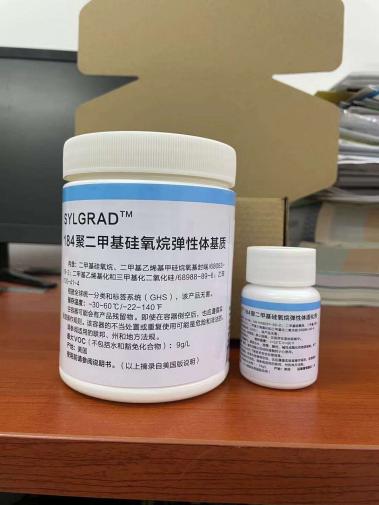
PDMS-微流控基质材料-PDMS/道康宁SYLGARD184-聚二甲基硅氧烷/0.5KG(组)

产品说明书PDF自助在线看:http://www.pdmshub.com/sih

信息更新:

美国总工厂生产的0.5KG原始包装的PDMS延期至2021年9月16日后才能交货,默认我们将发国内库存的进口分装产品(02085925-0.5KG);另受制于有机硅大幅涨价潮影响,2021年9月1日后将上调销售价格,另行通知。Dow Corning=道康宁=Dow SiL=陶氏,都是同一家公司。 2021.09.01更新

美国总工厂生产的0.5KG包装的PDMS恢复正常进口,合法正规,质量金标准,欢迎订购使用。并承诺从我司购买的皆为原厂包装,100%未开封,附带技术手册,非国产灌装仿制、非分装、非仿冒外包装产品,可以放心使用。大量订购更有优惠。2021.04.01更新

备注:由于dowsil与道康宁公司合并,美国总工厂生产的PDMS,价格涨幅高达1倍之多,因针对科研用户使用,特备货规格0.5KG。如果您需要美国总工厂原厂生产的大规格包装的预定,可以与QQ 11366508联系给予报价/货期。2021.05更新

此链接为PDMS-微流控芯片/PDMS/道康宁SYLGARD184/小桶0.5KG装的链接。

一般性的产品性能参数表参考以下小桶装的参数:

微流控芯片/PDMS/道康宁SYLGARD184;微流控芯片/PDMS/道康宁SYLGARD184;微流控芯片/PDMS/道康宁SYLGARD184;

品牌型号:道康宁SYLGARD184

包装规格:0.5KG/罐[含有45.4g固化剂,总重量为0.5KG]

产品颜色:保质期限:36个月

存放环境说明:室温,阴凉处保存

备注说明:

美国道康宁道康宁SYLGARD 184硅橡胶是由液体组分组成的双组分套件产品,包括基本组分与固化剂。基本组分与固化剂按10:1重量比完全混合,中等粘度混合液的稠度与SAE 40机油相似。无论厚薄,混合液将固化成为具有韧性的透明弹性体,最适用于电子/电气方面的封装与灌封应用。 道康宁SYLGARD 184硅橡胶在25~150℃的温度范围内固化,无放热现象,无需二次固化。固化过程完成后,可立即在-55~200℃的温度范围内使用。 产品特性:低毒性,在常规的工业操作中,无特别的注意事项; 无溶剂或固化副产物, 固化时不放热;无需特殊的通风条件,不会产生腐蚀;固化时,收缩量小; 固化后, 透明具有弹性;抗震与减缓机械震动;振动的传递性能小;元件可裸视检查与易修补性; 环保性能;低吸水性,良好的耐辐射性能;高真空状态下的低漏气性; 优异的电性能;较大温度范围内的稳定性, 抗解聚;在-55~200℃范围内,甚至在密闭状态下保持弹性与柔韧性,性能稳定; 阻燃性,UL可燃性分级为94 V-1,温度等级:130℃ 产品用途: 道康宁SYLGARD 184硅橡胶在电气/电子的封装与灌封方面有广泛的应用。